
Why Teachers Are Ditching Behavior Charts and Token Economies and What to Do Instead
What’s inside this article: Why behavior charts, clip charts, and token economies backfire, and what actually works instead. Practical, connection-based strategies for building a classroom where every child feels safe, seen, and ready to learn.
You probably remember the feeling from your own childhood.
Maybe it was your name written on the board for everyone to see. Or, maybe your teacher stopped the entire class to call out your mistake in front of everyone. Or, maybe your desk got moved away from everyone else, or worse, dragged out into the hallway where you sat alone while other students walked past (that was me).
For younger generations, it might have been a clip moved down a chart or a card flipped from green to yellow.
The systems looked different, but the feeling has always been the same: public shame.
Or, perhaps you were the kid who never got in trouble. The one who watched it happen to others. The one who always got the prize at the end of the week, or maybe the teacher even compared other kids to you.
Either way, these experiences shaped how we understood behavior, success, and our own worth.
These days, you might recognize these same strategies showing up in classrooms, therapy offices, and even at home, just dressed up with new names.
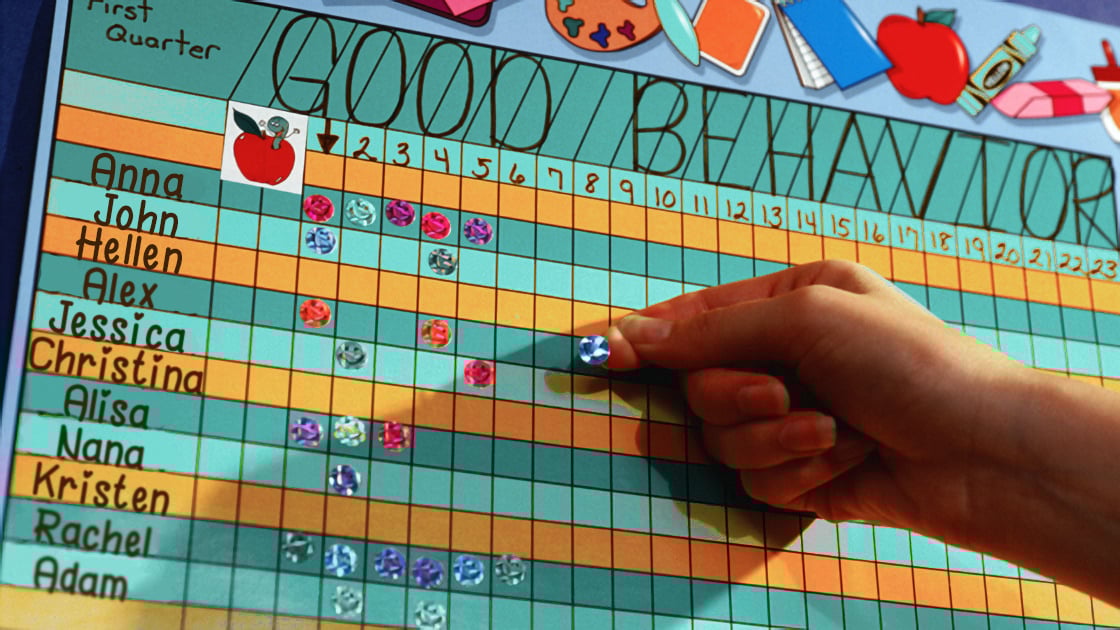
Behavior charts. Clip charts. Classroom currency. Token economies. Marble jars. Sticker charts.
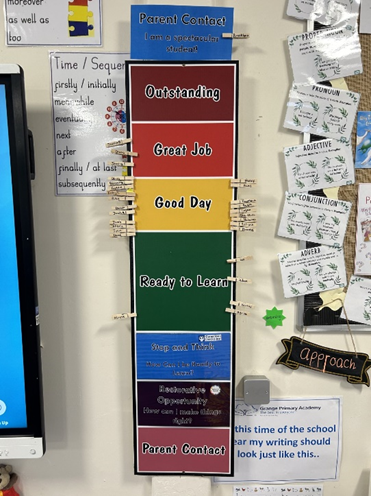
These tools are everywhere. They seem so logical. Reward the good behavior, ignore or perhaps take away points for the bad, and kids will learn to make better choices.
But here lies the problem: research in child development and neuroscience tells us these systems do not work the way we think they do. And for many children, especially neurodivergent kids, they even cause harm.
What These Systems Get Wrong About Behavior
The foundation of behavior charts and token economies comes from behaviorism, which is a theory from psychology that focuses entirely on observable behavior.
It assumes that all behavior can be shaped and controlled through external rewards and punishments, without needing to understand what’s happening inside a person’s mind (you can likely immediately see the flaws of this theory).
Do the right thing, get a sticker. Do the wrong thing, lose a point.
This perspective misses something fundamental about how children (and humans) actually work.
Dr. Ross Greene, author of “The Explosive Child,” puts it simply: kids do well if they can. When a child is struggling with behavior, it is not because they lack motivation. It is because they lack the skills to do better in that moment.
“But They Did It Yesterday”
Here is where it gets tricky, because sometimes these kids CAN meet the expectation. They do earn the sticker. They do stay on green.
And then the next day, they can’t.
This inconsistency often leads adults to believe the child is choosing not to behave. “You did it yesterday, so I know you can do it. You’re just not trying.”
But that’s not what’s happening.
Children have variable capacity, which means their ability to meet expectations changes based on everything happening internally and externally in their world.
How much sleep did they get?
Is something stressful happening at home?
Are they getting sick?
Is the classroom louder than usual today?
Did they skip breakfast?
Are they carrying leftover stress from yesterday?
On a good day, with all the right conditions, they might have enough capacity to hold it together. On a harder day, with fewer internal resources available, the same expectation becomes impossible.
Think about this: have you ever woken up in the morning with a plan to make a big dinner from scratch? Maybe a roast with all the fixings, homemade gravy, and everything. Or a lasagna with layers you assemble yourself.
You had every intention of doing it. You took the meat out to thaw. You were motivated.
But then you had a long day. Work ran late. You hit traffic. By the time you got home, you were exhausted and starving. The thought of spending an hour in the kitchen felt impossible.
So you ordered a pizza.
That wasn’t laziness. That wasn’t a lack of motivation. You had the motivation that morning. What you didn’t have by the end of the day was the capacity.
This is how it works for kids, too. Capacity fluctuates for all of us, adults and children alike. The difference is that when adults run out of capacity, we can order pizza. When kids run out of capacity at school, they get punished.
When Compliance Comes From Survival, Not Safety
Sometimes children DO comply with behavior systems consistently, but not because they feel safe and regulated. They comply because they’re in survival mode.
Fawning is a stress response. It’s the people-pleasing survival skill. When a child doesn’t feel safe, their nervous system may push them to people-please, follow rules, and avoid conflict at all costs. It looks like “good behavior” from the outside. But internally, that child is operating from the lower, survival-focused parts of their brain.
When the brain is in survival mode, it has access to a different set of skills than it does when it’s in an executive state. So, you might get compliance, but it comes at a cost if they can’t fully access higher functions like learning, creativity, problem-solving, or committing information to long-term memory.
So a child might sit quietly, follow directions, and earn every sticker on the chart. But, they’re not actually available for learning. Their brain is too busy keeping them safe.
We’re rewarding the appearance of success while the child misses out on actual learning.

These systems also damage the relationship between teacher and child. Every time you move a clip down or write a name on the board, you’re sending a message: “I am not safe. I will call you out publicly when you fail.”
Trust is the foundation of learning. Children are more likely to take risks, ask for help, and try hard for adults they trust. Behavior charts chip away at that trust every single day.
And for some children, the constant threat of being called out keeps their nervous system on high alert. They’re scanning for danger, watching for any sign they might get in trouble. That vigilance takes up mental energy that could otherwise go toward learning.
The Unequal Effort Problem
Behavior systems also assume a level playing field. Every child has the same opportunity to earn rewards or avoid consequences.
But the amount of effort required is vastly different depending on the child.
For a neurotypical child with strong regulation skills, sitting still for 20 minutes might require almost no effort. For a neurodivergent child (did you know 1 in 5 kids are neurodivergent?) whose body needs movement, or who is managing sensory overload, or who is working through anxiety, that same 20 minutes might take every ounce of energy they have.
Yet, both kids end up with the same sticker. But one child is depleted, and the other barely noticed. That’s not fair.
This kind of effort is not sustainable. Children who have to work significantly harder than their peers just to meet baseline expectations will eventually burn out. And when they do, they often get labeled as “behavior problems” when really, the system was never designed for them to succeed in the first place.

What About the Kids Who Don’t Struggle?
Here’s the other side of this: for children who CAN consistently meet behavior expectations, the reward system is unnecessary. They would behave the same way with or without the chart.
They follow expectations because it feels right to them, or because they have strong relationships with their teachers, or because they genuinely want to contribute to the classroom community.
When we introduce external rewards for behavior that these children were already doing naturally, we risk replacing their intrinsic motivation with extrinsic motivation. Now they’re doing it for the sticker instead of because it feels good.
Research calls this the overjustification effect. Take away the reward, and the motivation can disappear with it.
There’s another cost here, too. When rewards are public, children start comparing themselves to each other. The classroom shifts from a collaborative community to a competition.
Kids start noticing who has more points or more stickers. For the kids who consistently earn rewards, this comparison can create an inflated sense of their own goodness. They may start to look down on peers who struggle, or feel superior because they’re “winning.” That’s not the kind of character we want to build.
The Fixed Mindset Problem
Clip charts and behavior charts make one thing very clear to every child in the room: who is “good” and who is “bad.”
When the same names appear at the top and bottom of the behavior chart day after day, children start drawing conclusions about themselves and each other.
The kids who are always on green start to believe they’re “good kids.” The kids who are always on yellow or red start to believe they’re “bad kids.” Behavior stops being something you do and becomes something you are.
This is called a fixed mindset, and it’s harmful for everyone.
For the struggling kids, it creates a self-fulfilling prophecy.
If you already believe you’re a “bad kid,” why bother trying? You’re just going to end up at the bottom of the chart anyway. These children often stop putting in effort because they’ve learned that effort doesn’t change the outcome. Their identity is already set.
For the “good kids,” fixed mindset shows up differently. As mentioned, they may become afraid to take risks or make mistakes because their identity is tied to being good. What happens if they mess up? They might lose their status. They might not be the good kid anymore. So they play it safe, avoid challenges, and prioritize looking good over actually learning.
Meanwhile, the public nature of these charts teaches every child in the room to rank each other. They know who the “bad kids” are. They know who gets in trouble. This shapes how children treat each other, who they want to sit with, and who they include at recess.
We’re essentially teaching children to sort each other into categories of worthy and unworthy based on behavior that often has nothing to do with character.
The Long-Term Cost – Masking and Mental Health
When kids learn that acceptance and safety depend on hiding their struggles, they learn to mask.
Masking means suppressing natural responses, forcing yourself to appear “normal,” and hiding the parts of yourself that don’t fit society’s expectations. It’s exhausting. And over time, it takes a serious toll on mental health.
Children who grow up masking often experience higher rates of anxiety, depression, and burnout later in life. They may struggle to understand their own needs because they spent so long ignoring them. They may have difficulty in relationships because they learned that being their authentic self wasn’t acceptable.
Behavior charts don’t just fail to help struggling children in the moment. They can set them up for long-term harm by teaching them that belonging requires hiding who they really are.
The Hidden Impact on Neurodivergent Children
For autistic children, kids with ADHD, and other neurodivergent students, behavior management systems are especially harmful.
Many neurodivergent children experience differences in:
- Sensory processing
- Emotional regulation
- Executive functioning
- Communication
- Social understanding
These differences are not behavioral choices. They are part of how their brains work.
When you use a clip chart with a child who has sensory processing differences, you are essentially punishing them for having a nervous system that works differently.
The child who cannot sit still because their body needs movement gets their clip moved down. The child who has a meltdown because the classroom is too loud loses points. These aren’t behavioral choices, they’re unmet needs.
These children already work harder than their peers just to get through the day. Adding public shame and consequences to that experience does not help them learn. It teaches them that school is not a safe place for them.
Token economies can also be particularly challenging for neurodivergent children because:
- Abstract rewards may not be meaningful to them
- Delayed rewards (earning over time) can be hard to connect to behavior
- The social comparison aspect increases anxiety
- The rules may be unclear or inconsistently applied
What Actually Works: Building a Connection-Based Classroom
Right now, you might be thinking: Well, if behavior charts don’t work, what does? Maybe you’re thinking: I have 25-30+ kids to manage, what do you expect me to do?
The answer starts with understanding what behavior actually is: communication.
When a child is struggling, their behavior is telling you something. Maybe they are saying, “I’m overwhelmed.” Or “I don’t understand what you want.” Or “I need to move my body.” Or “Something is bothering me that I can’t put into words.”
But here’s the part we often get wrong: we cannot assume we know what they are communicating. We have to ask them.
Too often, adults observe a behavior and decide what it means without ever checking in with the child. Functional behavior assessments only look at observable behavior and categorize it. We guess. We assume. And there are two problems with that.
First, if we guess wrong, we solve the wrong problem. That doesn’t help anybody.
But second, even if we guess right, we have excluded the child from the problem-solving process entirely. Which means we might solve the right problem in a way that doesn’t actually work for that child.
Think about how much of a child’s life they have zero control over. They don’t choose when to wake up, what to wear, what to eat, when to eat, where to sit, what to learn, when they can talk, when they can move, when they can use the bathroom. Almost every minute of their day is dictated by adults.
So when you see what looks like a “power struggle” – where you demand compliance and the behavior only amplifies – that is often a desperate cry for a little bit of autonomy. The child is not trying to make your life harder. They are trying to have some say in their own experience.
Your job is to become genuinely curious about what they are communicating. Not to control the behavior, but to understand and address the underlying need by hearing it from them.
Here are practical strategies that actually help.
Build Strong Relationships First
Children learn best when they feel safe, seen, and connected. When a child trusts you, they are more likely to:
- Come to you when they are struggling
- Try hard even when things are difficult
- Accept your guidance and support
- Take risks in their learning
There is a simple, research-backed strategy called 2×10 that you can use to improve your relationship with even your most challenging student. Originally called the “two-minute intervention”by researcher Raymond Wlodkowski and later popularized by Allen Mendler in his book Connecting with Students, the concept is straightforward.
Pick the student in your class who is struggling the most. Spend two minutes per day for ten consecutive school days having a conversation with them about something that interests them. Not their behavior. Not their schoolwork. Just talking to them like a human being about their favorite video game, their pet, what they did over the weekend, literally whatever.
That is it.
Two minutes.
Ten days.
Research shows this simple investment of time leads to significant improvements in behavior and engagement. Why? Because that child walks away feeling like their teacher actually likes them. And when kids feel genuinely liked by their teacher, everything changes.
A few minutes of real connection each day does more for behavior than any chart ever could.
Create an Environment That Supports Regulation
Many behavior challenges happen because the classroom environment is overwhelming. Look at your space with fresh eyes.
Lighting
Is the lighting harsh? Fluorescent lights can be visually and auditorily overwhelming for many children (yes, they make a sound). When possible, use lamps or natural light instead of overhead fluorescents.
Noise
You can download a free decibel meter app on your phone to measure the sound level in your space. Both the American National Standards Institute (ANSI) and the World Health Organization (WHO) recommend that background noise in classrooms should not exceed 35 decibels for effective learning.
A typical occupied classroom often runs between 60-70 decibels, which is nearly double the recommended level.
Research shows children are more affected by noise than adults because they have a harder time filtering out background sounds to focus on speech.
If your classroom consistently runs above 35 decibels, consider what changes might help. Soft pads under furniture legs, reducing equipment noise, or providing headphones for children who need them can all make a difference.
Visual clutter
Is there visual clutter that could be simplified? Walls covered in posters, hanging projects, and bright colors can be overstimulating for some children. Sometimes less is more.
Movement
Do children have opportunities to move throughout the day? Sitting still for extended periods is dysregulating for most humans, especially children. Our bodies are not designed to stay motionless for hours at a time.
Movement is not the opposite of learning.
Movement is often what makes learning possible. Build movement breaks into your day. Let children stand while they work if that helps them focus. Provide fidget tools. Understand that when a child’s body is moving, their brain may actually be more available for learning, not less.
Calm spaces
Are there calm spaces where children can go when overwhelmed? Having a designated spot where a child can take a break without it being a punishment can prevent a lot of escalation.
When the environment supports children’s nervous systems, you will see fewer behavior challenges.
Understand What Regulation Actually Means
This is where things get tricky, because a lot of people say they want kids to learn self-regulation. But what they actually mean is they want kids to sit still, obey, be compliant, and not have needs.
That is not regulation. That is compliance. And they are not the same thing.
Real regulation means making adjustments and doing the things your body needs so that it feels better.
That might mean moving when you need to move.
Going to the bathroom when you need to go.
Getting a drink of water.
Putting your head down on your desk because you have a headache or did not sleep well.
These are all regulating behaviors.
We are not robots.
Every human body needs to move, needs to eat, needs to use the washroom. And those needs vary from one day to the next based on countless factors.
Here is what often happens: a child’s body needs movement, so they start to fidget. Instead of recognizing this as their body trying to regulate, we punish the fidgeting and demand they sit still even longer.
We have now denied them the very thing their body needed to stay regulated, and then we are surprised when their behavior escalates.
If you want children to develop self-regulation skills, you have to actually allow them to regulate. That means creating space for movement, for breaks, for meeting their body’s needs without punishment.
Teach Regulation Skills When Children Are Calm
Many children who struggle with behavior simply have not developed the regulation skills they need yet. They cannot manage big emotions because no one has taught them how.
Build regulation skills into your daily routine:
- Practice breathing exercises together
- Talk about emotions using specific vocabulary
- Notice and name body signals (tight shoulders, fast heartbeat)
- Role-play handling difficult situations
- Celebrate effort in regulation, not just success
These skills need to be taught when children are calm. A child in the middle of a meltdown cannot learn a new coping strategy. Their thinking brain has gone offline.
When you’re teaching these skills, remember the acronym MAP: Model the skill with your body, Add visuals they can reference, and Practice it together when everyone is regulated.
When you practice these skills during calm moments, you are building what Mr. Chazz calls a “superhighway in the brain” from the survival state to the executive state. So when stress hits, they have a pathway to follow.
Validate That Uncomfortable Emotions Are Normal
Kids at school are constantly doing things they have never done before. They are learning new concepts, navigating social situations, managing expectations from multiple adults. It is hard.
It is completely normal to feel frustrated, overwhelmed, confused, or upset sometimes. These emotions are part of being human. They should not be punished.
When we punish children for having feelings, we teach them that their internal experiences are not acceptable. That leads to suppression, masking, and long-term mental health consequences.
Instead, let children know that all emotions are welcome. The feeling itself is never the problem. We can work together on what we do with those feelings, but having them in the first place is not something that requires discipline.
Get Curious Instead of Reactive
When a child is having a hard time, get curious instead of reactive.
Occupational therapist Kelly Mahler, an expert in interoception (our ability to sense signals from inside our bodies), teaches that we often make a critical mistake: we label children’s emotions for them. We say things like, “I can see you’re frustrated” or “You’re getting angry.”
The problem? We might be wrong. And when we tell a child what they are feeling instead of asking, we rob them of the opportunity to tune into their own body and figure it out themselves.
Over time, this teaches kids not to trust their own internal signals.
Instead, try “I wonder” statements:
- “I notice your hands are in fists. I wonder what that means for your body.”
- “I see you moving around a lot. I wonder what your body needs right now.”
- “Something seems different. I wonder what’s going on inside?”
You can also model your own internal experience: “This noise is making my head hurt. Is it the same or different for you?”
This approach builds interoceptive awareness, which is the actual foundation of self-regulation. Children cannot regulate what they cannot feel or identify.
Remember: Q-TIP
When a child says something hurtful or does something that triggers you, remember Q-TIP: Quit Taking It Personally.
When children are dysregulated, they might say things like “You’re the worst teacher ever” or “I hate you” or “It’s not fair.” These statements feel like personal attacks. They are not.
This is the brain in survival or emotional mode, not executive mode. They are not making a conscious choice to hurt you. They are communicating that something in their world did not go their way and they do not have the skills (yet) to handle it differently.
The moment you take it personally, you get triggered into your own emotional state. And then you have two dysregulated people trying to solve a problem. That never works.
Use Collaborative Problem Solving
Instead of imposing solutions on children, work with them to solve problems together.
This approach, developed by Dr. Ross Greene, involves:
- Empathizing – Understanding the child’s concern or perspective
- Sharing your concern – Explaining why the situation is a problem
- Inviting collaboration – Working together to find a solution that addresses both concerns
When children are part of the solution, they are more likely to follow through. They also develop problem-solving skills they can use throughout their lives.
And here is what makes this different from most approaches: you are actually hearing what the problem is from the child’s perspective. Not guessing. Not assuming. Asking and listening.
He breaks this technique down in detail in his books The Explosive Child, Raising Human Beings, and Lost at School.
Build a Classroom Community That Supports Everyone
As a teacher, you’re ultimately responsible for the culture and community in your classroom. That includes how children treat each other when someone is struggling.
Instead of systems that rank children against each other, build a classroom community where everyone belongs.
When a child is having a hard time, the language you use matters. Instead of drawing attention to what they cannot do or punishing them in front of peers, try: “They’re still learning to ask for a turn” or “They’re still learning to wait.”
This phrase, “They’re still learning to…” does something powerful. It reframes the struggle as part of a normal learning process rather than a character flaw.
It invites empathy from classmates instead of judgment.
And it reminds everyone, including you, that skill development takes time.
Create a culture where mistakes are opportunities to learn, not failures to be ashamed of. Mr. Chazz uses the acronym OOPS: Our Opportunity to Practice Skills.
When something goes wrong, that is when the real teaching happens.
Making the Transition
If you have been using behavior charts or token economies, transitioning away from them takes time and intention, especially if it’s not the beginning of a school year.
Start by talking to your students honestly. Explain that you have been learning about better ways to support everyone in the classroom. Ask them how the current system makes them feel. You might be surprised by what they share.
Gradually reduce reliance on external rewards. Replace public tracking with private check-ins. Build in more regulation breaks and movement opportunities. Actually allow children to meet their body’s needs without requiring permission or causing shame.
Most importantly, invest in relationships.
Get to know your students as people. Understand their struggles. Work alongside them instead of trying to control them.
The behavior challenges will not disappear overnight. But over time, you will build something much more valuable than compliance. You will build a classroom where every child feels safe, seen, and ready to learn.
Behavior charts, clip charts, and classroom currency might seem like practical tools. They might even seem logical. But they are built on a flawed understanding of how children’s brains work.
Children do not misbehave because they lack motivation. They struggle because they lack skills,or because their environment is not supporting their needs.
Public tracking systems add shame to the struggle. Token economies replace intrinsic motivation with external rewards that eventually stop working.
There is a better way.
When you build relationships, create supportive environments, teach regulation skills, and respond to struggles with curiosity instead of consequences, you help children develop the genuine skills they need for life.
Your classroom becomes a place where every child, including the ones who struggle most, can truly thrive.
That’s worth more than any sticker chart could ever provide.
