
Using Expressive Art to Support Regulation, Self-Discovery, Identity Expression
What’s inside this article: What expressive art actually means (it’s more than painting), why it works so well for building regulation and self-awareness, and practical ways to use it with kids of all ages and sensory preferences – including options that don’t involve getting messy at all.
Disclaimer: This post contains affiliate links.
When most people hear “art therapy” or “expressive art,” they picture finger paints, messy tables, and maybe a stressed-out adult hovering nearby with a roll of paper towels.
And sure, that’s one version of art.
But expressive art can mean many things. It could look like a kid building a treehouse in Minecraft. Or a teen stringing beads and charms onto a bracelet. Or a preschooler banging on overturned pots and pans like drums while you both laugh.
Expressive art is really about the process of creating and engaging with materials – not about producing a perfect final product that belongs on a refrigerator.
That shift in thinking changes everything.
What Counts as Expressive Art?
When we talk about expressive art, we’re talking about any creative activity that allows someone to express themselves, explore their identity, or just engage with materials in a way that feels good to their nervous system.
Visual art is the obvious one:
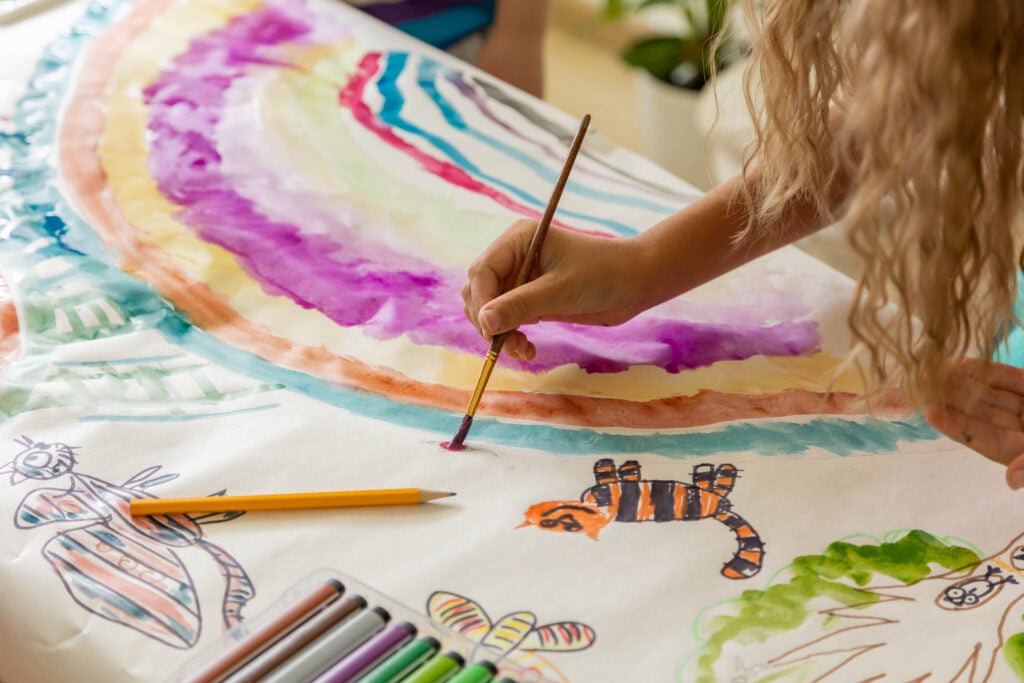
- Painting (with brushes, fingers, or found objects)
- Drawing and doodling
- Making collages from magazines
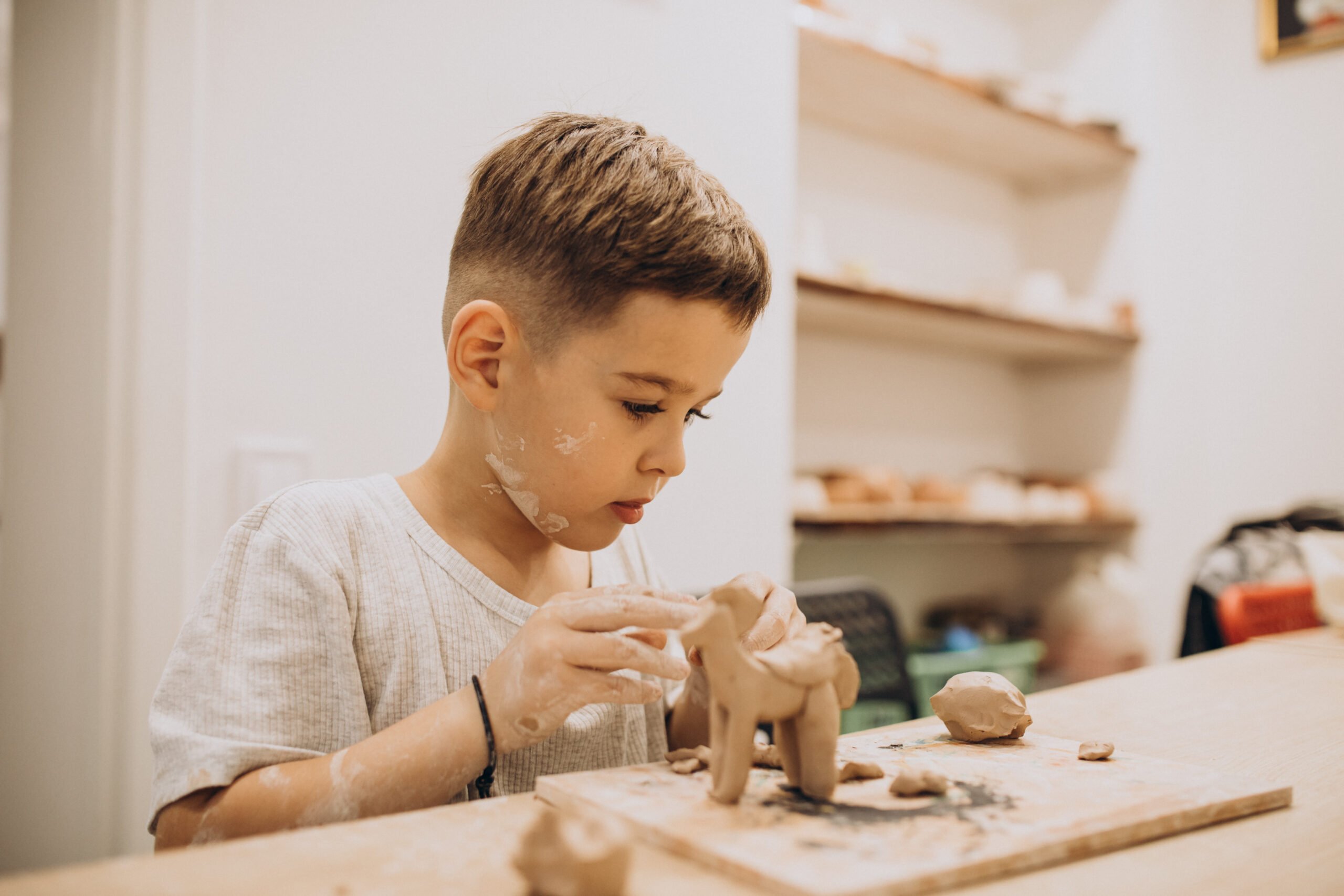
- Clay and sculpting
- Adult coloring books with watercolors
- Diamond art kits
But there’s so much more:
- Dance and movement – Dance parties, moving with scarves, any kind of body expression
- Music – Playing instruments, drumming on whatever’s nearby, creating rhythms, singing
- Theater and drama – Role playing, acting out scenarios, pretending
- Writing and storytelling – Creating stories, journaling, making up characters and worlds
- Building and construction – STEM projects, creating structures from random materials
- Digital creation – Minecraft, sandbox video games, digital art, beat-making apps

The key is that the focus stays on the process of creating, not on whether the end result looks “right.”
Why Expressive Art Works for Regulation and Self-Awareness
Expressive art can help kids develop self-awareness (which is important for self-advocacy) and self-regulation skills.
Here’s where it gets interesting from a nervous system perspective.
When kids (or adults) engage in creative activities, several things happen at once:
The body gets involved. Art naturally engages the senses. You’re touching materials, seeing colors and shapes, maybe hearing sounds. This multisensory engagement can be regulating on its own.
The pressure drops. When there’s no “right” answer – no correct way to paint a picture or build with blocks – kids can relax. The perfectionist part of their brain gets to take a break.
Communication opens up. Something about having your hands busy and your focus elsewhere makes conversation feel safer. Kids who struggle to talk about their feelings often open up naturally while creating.
Body awareness increases. Creating art gives you opportunities to notice how your body feels. Are your shoulders tight? Are your hands cold from the paint? Does this texture feel good or uncomfortable?
This last point is especially important. Expressive art creates natural opportunities to practice interoceptive awareness – the ability to notice and understand signals from inside your body.
Building Interoception Through Art
Interoception is your sense of how your body feels on the inside.
It’s how you notice hunger, thirst, temperature, emotions, and all those internal signals that help you understand what you need.
Many neurodivergent kids (and plenty of neurotypical ones, too) struggle with interoceptive awareness. They might not notice they’re hungry until they’re “hangry. They might not realize they’re overwhelmed until they’re already in tears.
Art offers a low-pressure way to practice noticing body signals.
Here’s what this looks like in practice:
You’re painting with a child, and you notice the paint feels cold and slimy on your hands. Instead of just wiping it off, you say out loud: “Ooh, this paint feels slimy and cold on my hands. At first, it felt kind of interesting, but now I’m noticing I want it off. Good thing I put this towel here – I’m gonna wipe it off because that feels more comfortable to me.”
That’s it. You’re not teaching a lesson. You’re just modeling what it sounds like to notice your body signals and respond to them. Kids will pick up on this.
More examples of what you might say while creating:
- “I wonder how your hands are feeling after all that squeezing.”
- “My shoulders are getting tight from leaning over this table. I think I need to stretch.”
- “There are a lot of materials out right now – I’m noticing my eyes feel a little overwhelmed. I wonder if you’re noticing anything like that, or if it feels different for you?”
- “I notice my heart is beating a little faster. I think I’m feeling excited about how this is turning out.”
You’re not labeling their emotions for them (that can actually backfire – I wrote a whole article about why – read it here). You’re modeling curiosity about internal experiences and inviting them to notice their own.
For older kids, you might say something like: “I notice when I do something repetitive like this, it helps my body feel a little slower. I wonder if you notice anything like that, or if it’s different for you?”
The goal is curiosity, not assumptions.
What If Your Child Doesn’t Like Art?
Some kids have had negative experiences with art.
Maybe they felt too pressured to create something that looked a specific way. Maybe they were put on the spot. Maybe there are some gender stereotypes mixed in there too (“art is for girls” is unfortunately still floating around and when I went looking for stock photos for this article I had a hard time finding pictures of boys making art online which reinforced this problem).
Maybe the experience of not having much choice over what you’re making or having it graded in school has led them to turn away from art.
There are a lot of reasons why a child might not “like art.”
So, if your kid says they don’t like it, you can try reframing it.
Instead of “let’s do art,” try:
- “Today we’re going to experiment with some supplies.”
- “We’re going to build something.”
- “Let’s play around with some paint and then throw everything away.”
- “We’re just going to make a big mess and see what happens.”
Sometimes, just removing the word “art” and saying something else removes the pressure entirely.
And sometimes it’s about finding the medium that actually resonates with them.
A 12-year-old who hates painting might love:
- Minecraft or other sandbox video games
- Making music with a beat-making app
- Building contraptions from random recycled materials
- Making friendship bracelets while talking
- Role-playing games like Dungeons and Dragons
- Writing stories or creating characters
The digital options are worth paying attention to. A kid who builds an elaborate world in Minecraft is doing expressive art. They’re making creative decisions, problem-solving, and expressing something about themselves through what they choose to create.
You can use this too. Give prompts like “build a place where you feel calm” or “create something that shows what your week was like.” Then talk about what they made. You’d be amazed at what comes out when kids are doing something they actually enjoy without a lot of pressure.
Respecting Tactile Sensitivities
Here’s something really important: expressive art doesn’t have to be messy.
If you know a child is sensitive to certain textures, don’t bring those materials out at all.
There are plenty of ways to create without anyone touching slime, shaving cream, or finger paint.
Mostly mess free art options:
- Silk scarves or ribbons for movement and dance
- Drawing and doodling with pencils, markers, or paint pens (I love these)
- Adult coloring books (yes, even for kids – the detailed patterns can be really regulating)
- Beading and jewelry making
- Building with blocks, LEGOs, or found materials
- Collaging with magazines (just tearing and arranging – no glue needed)
- Digital art and games
- Diamond art
- Music and drumming
- Drama and role-playing
- Writing stories
If you’re not sure what a child can tolerate, start with materials that are easy to control and put down. Pay attention to their body language. Are they leaning in or pulling away? Do they look curious or disgusted?
Another thing you can try if you aren’t sure about a child’s sensory preferences is an approach called strewing. Which is where you just put a variety of options out in the space and see what they naturally gravitate toward.
Maybe lay out some scarves, a few markers with paper, some clay, some building materials – and then see what they do. You can start doing your own thing while you wait to see what catches their attention. What they reach for (and what they avoid) tells you a lot about what feels good to their nervous system.
Either way, watch for subtle signs of discomfort too – even something as small as slightly turning their body away from the materials.
What to do if you notice discomfort:
- Validate: “That might feel uncomfortable. I wonder if that feels yucky to you.”
- Model advocacy: “No thanks, I don’t like that. Let’s put it away.”
- Replace it with something else entirely – no big deal.
The goal here isn’t to desensitize anyone. If you try to force a tactile-defensive kid to touch something that makes them uncomfortable, you’re going to lose their trust fast.
I’m pretty tactile-defensive myself. If someone tried to “help” me get used to a texture I hate by making me touch it more, I’d be done with that activity (and probably that person) real quick. Kids deserve the same respect.
Everyone experiences sensory input differently. What feels good to you might feel awful to them. Both of those experiences are valid.
Working With Perfectionists
Some kids have a vision in their head of what their art should look like, but their hands can’t quite make it happen. Or they make one small mistake and want to quit entirely. Maybe they’ll even scribble all over their work or rip it up after making a small error (*cough* my 9-year-old *cough*)
This is so common. And it’s hard to watch.
Here’s what I found helps:
Match their energy first. Don’t immediately jump to problem-solving. Start with validation: “That is sooo frustrating! It’s so hard when the idea you have in your head isn’t coming out on the page. I get that. That happens to me, too.”
Model imperfection out loud. If your own inner perfectionist voice shows up, work through it where they can hear you. Kids are always watching and listening. Let them see you handle it: “Ugh, this doesn’t look like I wanted. Okay, what if I… hm. Actually, now it kind of looks like a weird bird. I’m going with it.”
Offer creative alternatives:
- “This can just be scrap paper now. Want to rip it up into little pieces and make confetti?”
- “What if we added something to it to turn it into something totally different?”
- “Sometimes when this happens to me, I just start over with a new piece. That’s always an option.”
Sometimes, just sit with them in the discomfort. You don’t have to fix it. You can just be there while they feel frustrated. Co-regulating this way can actually be pretty powerful – showing them that big feelings are okay and they don’t have to be rushed through.
Managing Materials (Without Going Broke)
Using expressive art regularly can get expensive if you’re not strategic about it.
Here are some ways to have fun with art on a budget:
Use recycled and found materials. Keep a box of random stuff: takeout containers, cardboard tubes, clothespins, fabric scraps, bottle caps, old magazines. Kids can build, create, and experiment without you worrying about wasting supplies.
Buy cheap consumables. The Dollar store is your friend for paint, paper, and markers that you know are going to get used up quickly.
Pre-prepare “use it up” boxes. If you’re going to give a kid permission to squeeze out all the paint and watch it drip (which is incredibly regulating for some kids, by the way), prepare a separate box with materials you’re already mentally prepared to lose.
This mental shift is important. If you’re going to feel stressed and dysregulated watching them “waste” supplies, either hide those supplies that day or prepare yourself ahead of time.
Your regulation matters too. You can’t co-regulate with a kid if you’re internally screaming about the paint.
Materials that give you the most flexibility:
- Painter’s tape (the cheap stuff) – kids love taping things everywhere
- Old magazines and flyers – for looking at, ripping, collaging
- Free music and beat making apps
- Paper and basic markers/crayons
- Random recycled containers and cardboard
- Toilet paper rolls, egg cartons, etc
- Items from nature – rocks, pine cones, leaves, bark
Handling Cleanup
Let’s be honest about this one. Sometimes, one single art session can turn your room into a disaster zone.
Here are a few tips:
Prepare the environment ahead of time. If you know messy play is likely, set up accordingly. Have towels ready. Use a tablecloth you don’t care about, or grab some disposable plastic ones. Contain the chaos to one area if you can.
Be authentic about your own needs. You can say: “I love making messes, but I also know I need to save time to clean up because feeling rushed makes me really stressed. So I’m going to start putting some things away soon.”
Start cleaning while they keep going. About halfway through, you might say: “I’m going to start cleaning up. You can keep going or help – it’s not time to stop yet. I’m just getting started.”
This does two things: it gives you a head start on the mess, and it signals nonverbally that things are winding down without making it feel abrupt. For a lot of kids, cleanup = the end, and the end is hard. Separating those two things can help.
Accept that sometimes it’s just chaos. And you look at the room after they leave and just… deal with it. If you had an amazing time where real connection and learning happened, that mess was worth it.
The Skills You’re Actually Building
When you use expressive art with intention, you’re working on a lot at once:
- Self-regulation – Learning to notice your body’s signals and respond to them
- Interoceptive awareness – Practicing body awareness in low-pressure moments
- Sensory processing – Engaging with different textures, movements, and sounds in a way you can control
- Executive function – Planning projects, sequencing steps, problem-solving when things don’t go as expected
- Identity expression – Exploring who you are through what you create
- Autonomy and self-advocacy – Making choices about materials, learning to say “I don’t like that,” expressing preferences
- Perspective-taking – Understanding that others might experience things differently (especially when you’re creating together and comparing experiences)
And… Connection.
Art creates opportunities for real conversation that might not happen otherwise. There’s something about having your hands busy that makes talking feel less intense.
Getting Started with Art When You’re Not ‘Artsy’
Maybe you’re the one who doesn’t like art or who thinks you’re not ‘artsy’ enough to do expressive art with your kids. The good news is, you don’t need to be artistic. You don’t need fancy supplies. You don’t even need a plan.
Start with something that genuinely interests you. If you’re excited about what you’re doing, that energy is contagious. If you hate finger painting, don’t do finger painting. Find something you actually enjoy.
Model authentically. Talk about your own body signals, your own preferences, your own process. Kids learn so much from watching the adults around them work through creative challenges and imperfections.
Let them lead when they’re ready. If you’re stuck or not feeling creative, ask the kid for ideas. They usually have plenty. And giving them that power is good for autonomy anyway.
Keep it low-pressure. No expectations about what the final product should look like. No requirements to share if they don’t want to. Some kids will want to show you everything they make. Others will want to throw it away immediately. Both are fine.
The point is the process – what happens in their brain and body while they’re creating. That’s where the real work happens.
And that’s where the real connection happens, too.
So grab some markers, put on some music, and see what happens when you stop worrying about the product and start paying attention to the process.